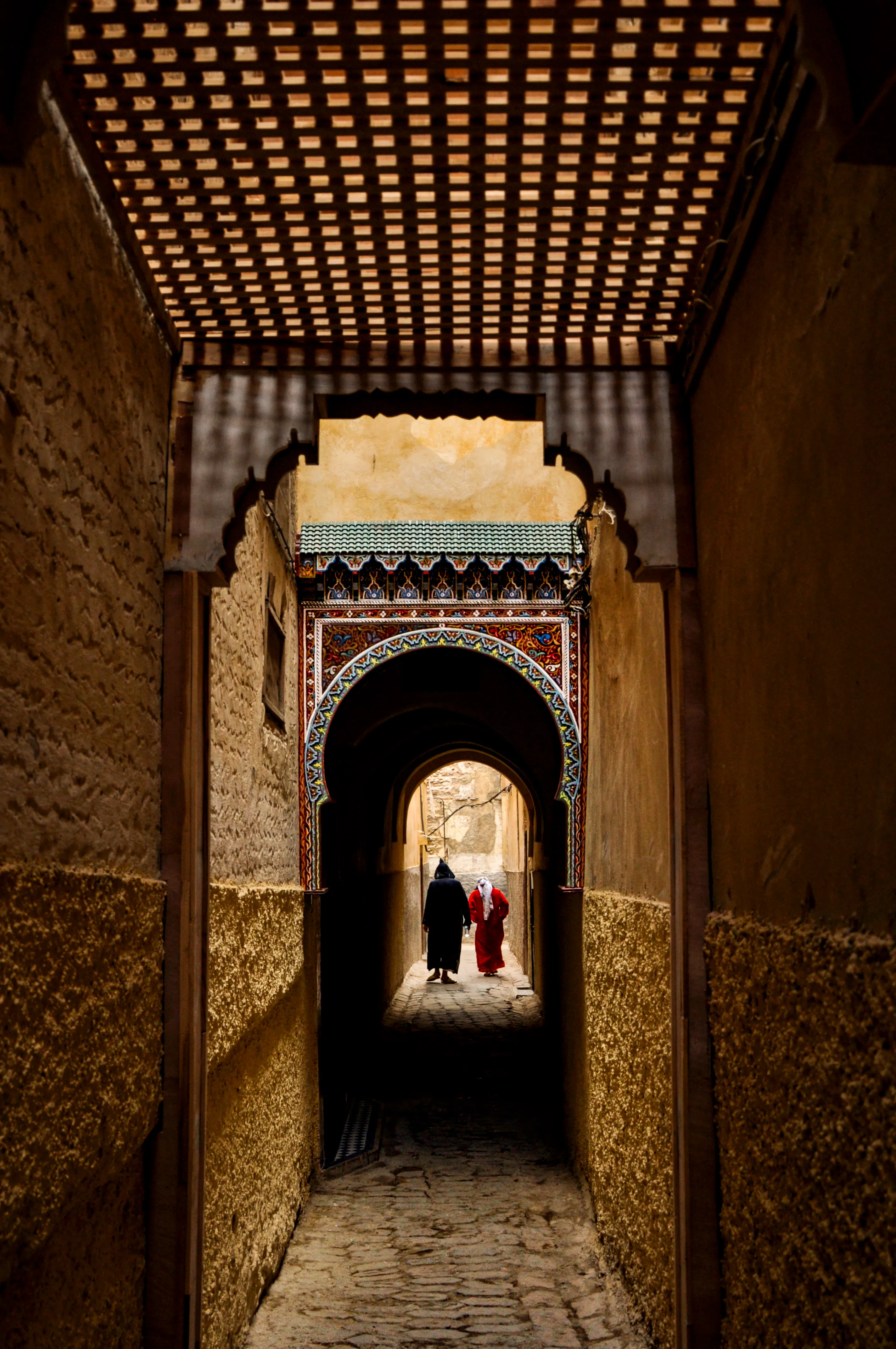
A Weekend in Fes: Souks, Tanneries and Mint Tea
By UserCarte · 5 min read
Fes is the least compromising of Morocco's big cities, and that's exactly why people love it. Marrakech has learned to package itself for visitors; Fes el Bali, the older of its two walled medinas, still functions primarily as a working city of some 9,000 lanes where donkeys have right of way and the copper-beaters start early. A weekend is short, but it's enough to get properly lost, watch dyers work vats that have been in use for centuries, and drink a great deal of sweet mint tea. The trick is choosing depth over checklists.
When to Go and How Long You Really Need
Spring and autumn are the sweet spots. March through May brings mild days and the surrounding hills still green; September through November is warm and settled, with the olive and date harvests filling the souks. July and August are genuinely hot — Fes sits inland with no coastal breeze — and the medina's narrow, shaded lanes become a survival strategy rather than a charm. Winter is cool, sometimes wet, and blissfully uncrowded, though riads in old buildings can be chilly, so ask about heating.
Two full days plus two nights is the realistic minimum. If your trip falls during Ramadan, expect daytime quiet, shortened hours and an electric atmosphere after sunset — worth experiencing, but plan food around it. The Fes Festival of World Sacred Music, usually held in late spring, transforms the city and fills accommodation months ahead.
Getting Into the Medina — and Finding Your Way Out
Fès–Saïs airport handles a growing number of European routes, and it's a short drive from town. Otherwise, Morocco's national rail operator connects Fes comfortably to Casablanca, Rabat, Tangier and Marrakech; the train is cheap, scenic and far less stressful than driving. Do not attempt to bring a car into the medina — it is the largest car-free urban area in the world, and that is not a slogan.
Arrive with the name and nearest landmark of your riad written down, and accept that a porter with a handcart may need to meet you at the closest gate. Once inside, download offline maps but expect them to fail occasionally; asking a shopkeeper is faster and more reliable than a blue dot. The two main arteries, Talaa Kebira and Talaa Seghira, both descend from the Bab Bou Jeloud gate, so when you're disoriented, remember that walking uphill generally leads back to the perimeter.
Hiring a licensed guide for your first half-day is money well spent. A good one will orient you, get you into courtyards you'd walk past, and deflect the unofficial "helpers" who attach themselves to new arrivals. Book through your accommodation rather than on the street.
Day One: The Heart of Fes el Bali
Start at the blue-tiled Bab Bou Jeloud and walk downhill. The Bou Inania Medersa, a 14th-century Marinid religious school, is the single most rewarding stop in the city for architecture: carved cedar, stucco filigree and zellij tilework arranged with almost mathematical calm. Further down, the Nejjarine Museum of Wooden Arts and Crafts occupies a restored caravanserai and has a rooftop terrace that's a useful reset point.
Continue toward the Al-Quaraouiyine complex — one of the world's oldest continuously operating universities, with a restored library alongside it. Non-Muslims cannot enter the mosque, but you can glimpse the courtyards through doorways, and the neighbouring Al-Attarine Medersa is open and spectacular. Spend the late afternoon in the spice and food souks around Souk Attarine and Place Seffarine, where metalworkers hammer trays in the open air. Break for tea whenever the noise gets to be too much; that's what the terraces are for.
Day Two: Tanneries, Crafts and a Higher View
Go to the Chouara tanneries in the morning, when the light is good and the vats are busiest. You'll be led to a leather shop's terrace overlooking the honeycomb of dye pits and handed a sprig of mint to hold under your nose — the smell is real. A small tip for the terrace access is customary; there's no obligation to buy a jacket, but browse politely and haggle if you do.
Afterwards, consider the potters' quarter on the medina's edge, where hand-cut zellij tiles and Fassi blue-and-white ceramics are made, or the embroidery and brass workshops scattered through the lanes. Late in the day, take a taxi up to the Merenid Tombs or Borj Nord for the panoramic view of the medina at golden hour — a much better sense of the city's scale than any map gives. If you have an extra hour, Fes el-Jdid adds the Mellah, the Ibn Danan Synagogue and the ornate gates of the royal palace.
Where to Stay, What to Eat, and Practical Notes
Sleep inside the medina in a riad or dar. These converted courtyard houses range from simple to extravagant, and waking up to birdsong in a tiled courtyard is half the reason to come. If you want lifts, parking and modern rooms, the Ville Nouvelle has conventional hotels and easy taxi access, at the cost of atmosphere.
Eat bissara (fava bean soup) from a hole-in-the-wall for breakfast, sfenj doughnuts from a fryer, and at least one pastilla — the sweet-savoury pigeon or chicken pie that Fes claims as its own. Rooftop restaurants trade views for cooking; the better meals are often in riad dining rooms, ordered a few hours ahead. Dress modestly, carry small notes for tips and taxis, ask before photographing people, and build in an unhurried hammam visit. Fes rewards slowing down more than almost anywhere in Morocco.