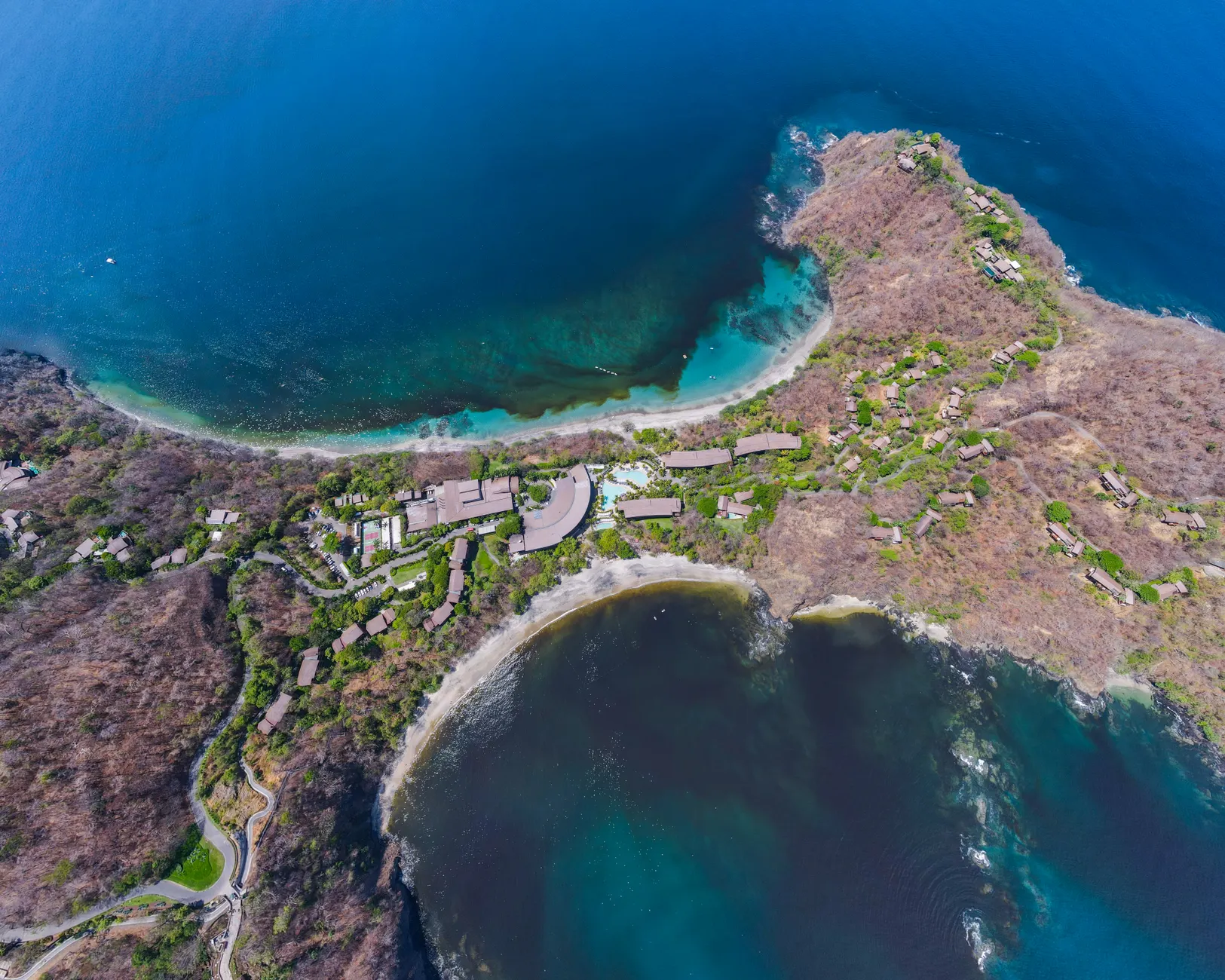
Costa Rica's Papagayo Peninsula: Where Luxury Meets Rainforest
By UserCarte · 5 min read
Peninsula Papagayo is a gated resort enclave on Costa Rica's northern Pacific coast, roughly 30 minutes from Liberia's international airport, where high-end hotels such as the Four Seasons and Andaz sit inside protected forest. Expect calm cove beaches on Bahía Culebra, howler monkeys in the trees outside your room, a marina, golf, and easy day trips to volcanoes and rainforest inland.
Is it actually rainforest?
Not quite, and knowing the difference will make your trip better. The Papagayo Peninsula sits in Guanacaste, a region of tropical dry forest — a rarer, more fragile ecosystem than rainforest, and one that behaves very differently across the year. In the dry months the trees shed their leaves, the hills turn gold, and wildlife concentrates around water, which makes animals easier to spot. In the green season the same hillsides explode into dense, humid jungle.
True rainforest starts a few hours inland and to the south, in the cloud forests around Monteverde and the wet slopes near Arenal and Tenorio. Many visitors split their trip: a few nights of comfort and beach on Papagayo, then several nights in a genuinely rainforest lodge. That combination delivers the "luxury meets rainforest" experience more honestly than staying put.
What Papagayo does have is remarkable low-effort wildlife. Howler monkeys wake the resorts at dawn, white-faced capuchins raid unattended breakfast tables, iguanas sun themselves on walkways, and white-throated magpie-jays are everywhere. Coatis, agoutis and the occasional pair of scarlet-rumped tanagers round out the cast, all within a short walk of your room.
When is the best time to visit?
The dry season, roughly December through April, is Guanacaste at its most reliable: hot, sunny, windy in January and February, and almost rainless. It is also peak season, with the highest rates and the busiest beaches — Christmas, New Year and Easter week book out furthest ahead.
The green season, roughly May through November, brings lower rates, dramatically greener landscapes, better waterfall flow and afternoon downpours that often clear by evening. September and October are the wettest months regionally and some tour operators reduce schedules, though Guanacaste stays drier than Costa Rica's Caribbean and southern Pacific coasts. May, June and late November are the sweet spot for value.
How do you get there and get around?
Fly into Daniel Oduber Quirós International Airport in Liberia (LIR), which has direct seasonal service from several North American hubs. The drive to the peninsula is short and straightforward on paved road, and most resorts arrange private transfers. Arriving into San José instead adds a long domestic connection or a four-to-five-hour drive, so Liberia is worth prioritising.
Once inside the gates, resort shuttles loop between hotels, beaches, the marina and the golf course, and most guests never touch a car. If you want to explore Guanacaste independently — waterfalls, volcano parks, surf towns like Tamarindo — rent a 4x4 or SUV, especially in the green season when secondary roads get rough. Otherwise, day tours with hotel pickup are simpler and let someone else handle the driving.
What should you do while you're there?
The peninsula's own coves are the first draw. Playa Nacascolo is the best-known stretch of pale sand, with calm, snorkel-friendly water; smaller beaches on the resort side are reachable by shuttle or short trail. Under Costa Rican law all beaches are public, so access is guaranteed even where the surrounding land is private.
On the water, catamaran cruises around Bahía Culebra, kayaking, stand-up paddleboarding and sportfishing out of the marina are all easy to arrange. Serious divers come for the Bat Islands (Islas Murciélagos), a long, choppy boat ride north where bull sharks gather — an advanced dive, not a beginner outing.
Inland, Rincón de la Vieja National Park delivers volcanic mud pots, fumaroles and forest trails, often paired with canopy zip lines and hot springs. Llanos de Cortés is a wide, swimmable waterfall an easy drive away, and Río Celeste in Tenorio Volcano National Park is a longer but spectacular day trip to a famously turquoise river. Closer to home, guided nature walks and night walks on the peninsula's own trails are consistently underrated.
Where should you stay?
Inside the gates you're choosing between a handful of large, design-led resorts — the Four Seasons occupies the tip of the peninsula, with a Hyatt property and other upscale hotels nearby, plus private villa rentals. All are self-contained, which is the point: this is a destination for people who want beach, spa, golf and kids' programmes without logistics.
The trade-off is that dining and shopping are largely captive and priced accordingly, and there is no walkable town. If you want local sodas, markets and a bit of grit, base yourself instead in nearby Playas del Coco or Playa Hermosa and visit the peninsula's beaches by day — or better, book a few nights inside and a few nights out.
Frequently asked questions
Is the Papagayo Peninsula worth it?
Yes, if you want polished, low-effort luxury with genuine wildlife on the doorstep and a short airport transfer. It is less compelling if you're after local culture, nightlife or budget travel, since the gated setting limits spontaneity. Many travellers pair two or three nights here with a rainforest or volcano lodge inland.
Can anyone visit the beaches on Peninsula Papagayo?
Yes. Costa Rican law makes all beaches public property, so non-guests can access peninsula beaches such as Playa Nacascolo, typically arriving by road to public parking areas or by boat. Resort facilities, pools and restaurants, however, are private and generally reserved for guests unless you book a day pass.
How many days do you need on the Papagayo Peninsula?
Three to four nights is enough to enjoy the beaches, take a catamaran or snorkel trip, and fit in one inland day trip to a volcano or waterfall. A week suits families who want unhurried pool days, or travellers combining Papagayo with Rincón de la Vieja and Río Celeste excursions.