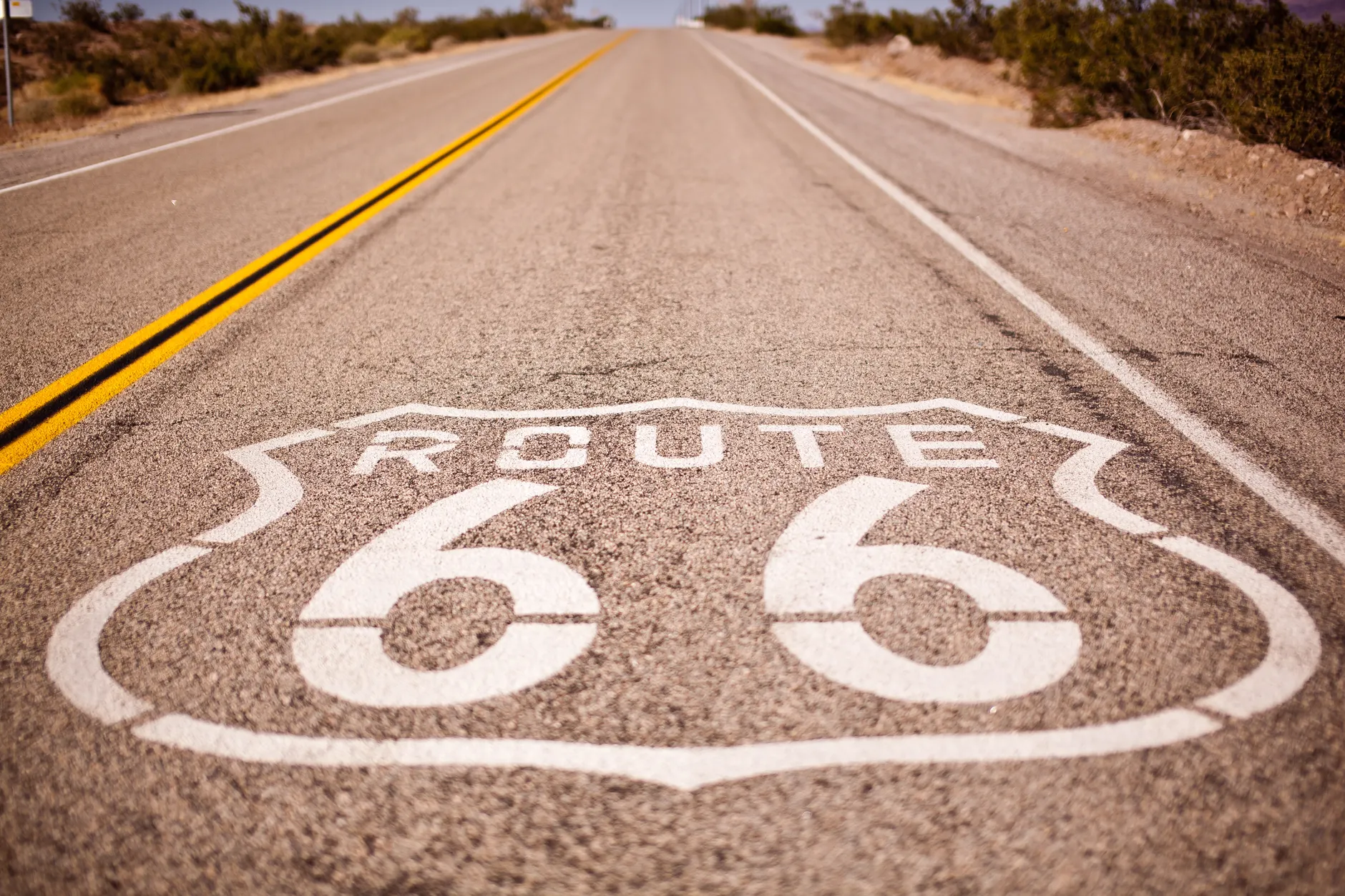
Route 66 Turns 100 in 2026: Why the Historic Highway Is a Top US Travel Trend
By UserCarte · 5 min read
Route 66 was commissioned on November 11, 1926, which makes 2026 the highway's 100th anniversary. Expect centennial festivals, restored neon signs, museum openings and unusually heavy demand for the small motels strung along the 2,400-mile route from Chicago to Santa Monica. It is shaping up to be one of the year's defining US travel trends, and the reason to book lodging months ahead rather than improvising.
Why is the centennial such a big deal?
Route 66 is the rare American road that carries genuine mythology: Dust Bowl migration, postwar car culture, Nat King Cole, diners, motor courts and mid-century neon. It was officially decommissioned in 1985 and replaced by interstates, so much of what survives does so because volunteers, small-town associations and family businesses kept it alive.
The anniversary has accelerated that work. Across the eight states the road crosses — Illinois, Missouri, Kansas, Oklahoma, Texas, New Mexico, Arizona and California — you'll find neon restoration projects, repaved original alignments, refreshed visitor centers and new interpretive signage. State and federal centennial commissions have been coordinating events for years, and many towns are planning parades, car shows and festival weekends clustered around the November 11 anniversary date. The practical upshot for travelers: the road has never been easier to follow or better interpreted, but it has also never been busier.
When is the best time to drive it?
Late spring (May to early June) and early fall (September to October) are the sweet spots. You get long daylight, open attractions and tolerable temperatures across both the Midwest and the desert Southwest. Summer is peak season for classic-car rallies and family trips, but the Mojave and Texas Panhandle stretches get punishingly hot, and roadside motels fill fast.
Winter is the toughest call. Snow and ice are real risks in Illinois, Missouri and the high country around Flagstaff, and many small-town attractions shorten their seasons or close entirely. If your priority is centennial events, check event calendars first and build the route around them, since anniversary programming will cluster in warmer months and around November 11.
How long do you need, and how do you navigate?
Plan two weeks one way if you want to actually stop. Ten days is doable but rushed; three weeks lets you add detours to the Grand Canyon, Santa Fe or St. Louis. Driving the full length in under a week means seeing the interstate, not the Mother Road.
Navigation is the part first-timers underestimate. Route 66 is no longer a single continuous highway — it exists as frontage roads, state highways, city streets and abandoned alignments, and in places multiple historic alignments run parallel. GPS alone will quietly route you onto I-55, I-44 or I-40. Carry a turn-by-turn Route 66 guidebook (the long-running EZ66 Guide is the standard among road-trippers), pair it with a dedicated Route 66 mapping app, and accept that you will miss turns. Download offline maps before the western stretches, where cell coverage disappears for long gaps.
A few driving realities: fuel up more often than you think in western New Mexico, Arizona and the Mojave; expect rough pavement on original alignments; and plan around the fact that many one-person roadside businesses keep informal hours. Always confirm current hours before counting on a specific stop.
What are the unmissable stops?
The pleasure of Route 66 is cumulative — dozens of small oddities rather than a handful of headliners — but a few stops anchor most itineraries. Heading west: the route's start near Chicago's Grant Park, Illinois' vintage diners and drive-in theaters, Missouri's cave attractions and Ozarks stretches, the brief but beloved Kansas segment, the Blue Whale of Catoosa and the Route 66 museums of Oklahoma, Cadillac Ranch outside Amarillo, the Midpoint Café in Adrian, the neon corridor of Tucumcari, the Painted Desert and Petrified Forest in Arizona, Winslow's Standin' on the Corner plaza, Seligman's preserved main street, the burros of Oatman, the ruins of Amboy in the Mojave, and the pier at Santa Monica where the road symbolically ends.
Where should you stay?
Sleeping in historic motor courts is the point. Iconic survivors include the Wigwam Motels in Holbrook, Arizona and Rialto, California; the Blue Swallow Motel in Tucumcari; and the Munger Moss in Lebanon, Missouri. These are small, family-run properties with a handful of rooms — meaning a centennial-year surge can sell them out months in advance. Book the landmark motels first and fill the gaps with chain hotels in larger towns like Springfield, Amarillo, Albuquerque and Flagstaff.
Budget realistically: independent motels are generally inexpensive, but fuel, one-way rental car drop-off fees and the sheer mileage add up. If you're flying in, Chicago-to-Los Angeles open-jaw tickets and a one-way rental are usually simpler than doubling back.
Frequently asked questions
How many miles is Route 66 and how long does it take to drive?
The historic route runs roughly 2,400 miles from Chicago to Santa Monica across eight states. Driving nonstop on interstates takes about four days, but following the old alignments and stopping at roadside attractions realistically takes 10 to 14 days. Allow three weeks if you want side trips like the Grand Canyon.
Can you still drive the entire original Route 66?
Not as one continuous highway. Route 66 was decommissioned in 1985, and sections were absorbed into interstates or abandoned. Around 85 percent is still drivable as frontage roads, state highways and town main streets, but you need a dedicated Route 66 guidebook or app to stay on the historic alignments rather than the interstate.
Which direction is better, east to west or west to east?
Most travelers drive east to west, Chicago to Santa Monica, because it follows the historic migration narrative, puts the Pacific at the finish line and matches how nearly every guidebook is organized. Driving west to east works fine and is often quieter, but you'll be reading your route directions in reverse.