Sofia, Bulgaria The Affordable European Capital Everyone's Suddenly Booking
By UserCarte · 5 min read
Sofia is Bulgaria's capital and one of the cheapest city breaks in the European Union — a compact, walkable centre where Roman ruins sit under office buildings, mineral springs run free in the park, and a sit-down meal with wine costs a fraction of Western Europe. It's a two-to-three-day city with a mountain topping 2,200 metres on its doorstep.
Why is everyone suddenly booking Sofia?
Three things converged. Budget airlines added routes from across Europe, making Sofia one of the cheapest capitals to fly into. Bulgaria completed its entry into the Schengen area, removing border friction for travellers already in the zone. And as Prague, Lisbon and Budapest have grown crowded and expensive, Sofia offers a recognisably European capital — grand boulevards, Orthodox domes, tree-lined parks, a serious café culture — without the queues or the markups. The city also happens to be unusually layered: a Roman city (Serdica), an Ottoman provincial hub, a 19th-century national capital and a socialist-era showpiece are all stacked within a 20-minute walk. Add a ski-and-hike mountain reachable by public transport and the appeal becomes obvious.
When is the best time to visit?
Late May to June and September to early October are the sweet spots: warm days, cool evenings, open terraces and green parks without July's heat, which regularly pushes into the mid-30s Celsius. Autumn is particularly good for day trips, when the forests around Rila and Vitosha turn gold. Winter is genuinely cold and snowy, which is the point if you're skiing — Vitosha is on the city's edge, and Borovets and Bansko are within reach for a day or overnight trip. The trade-off is that Sofia sits in a basin and can suffer poor air quality during winter temperature inversions, so check air-quality readings if you're sensitive. Early spring is the weakest window: grey, muddy and unpredictable.
How do you get around?
The metro connects the airport to the city centre directly, reaching the central Serdika interchange in roughly 20 minutes — no taxi negotiation required on arrival. The network is clean, cheap and easy, and contactless bank cards are widely accepted at barriers and on board; single tickets and day passes are also sold. Trams and buses fill the gaps, including the routes toward the Vitosha foothills. Within the core, walking is best: the yellow cobblestone streets around the Presidency, Saint Sofia Church and Alexander Nevsky Cathedral form a tight cluster. For taxis, book through a local app or an official rank rather than accepting unsolicited offers — that's where visitors get overcharged. For day trips, Sofia's Central Bus Station and Central Railway Station sit side by side, and organised minibus tours to Rila Monastery and the Seven Rila Lakes are straightforward.
What should you see and do?
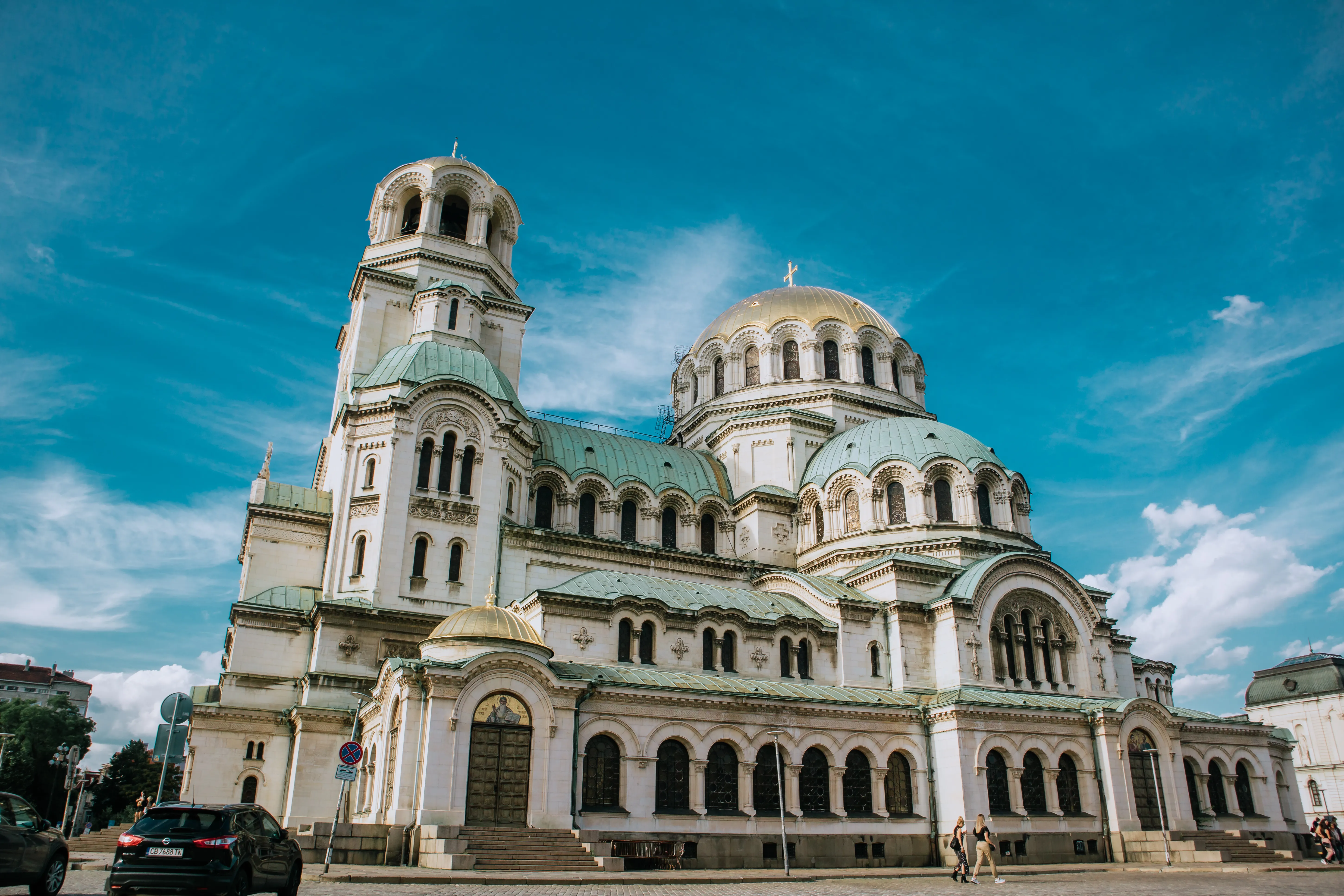
Start at Alexander Nevsky Cathedral, then walk to the tiny 4th-century Rotunda of St George, hidden in a government courtyard, and the excavated Roman streets of Serdica displayed in the pedestrian underpass beneath Nezavisimost Square. Nearby stands the "Square of Religious Tolerance", where an Orthodox church, a mosque, a synagogue and a Catholic cathedral all sit within a few hundred metres. Fill your bottle at the public mineral spring taps beside the former Central Mineral Baths, now the Sofia History Museum. For context on the communist decades, pair the Museum of Socialist Art with a guided apartment-museum visit. Then head up: a bus and chairlift combination takes you from the city to Vitosha's trails and the Cherni Vrah summit plateau. Boyana Church, a UNESCO-listed chapel with extraordinary 13th-century frescoes, is at the mountain's base and best combined with the same trip. Rila Monastery, about two hours south, is the single best full-day excursion in the country.
Where should you stay and eat?
Base yourself between Vitosha Boulevard and Alexander Nevsky Cathedral for walkability, or in leafy Oborishte and around the Doctor's Garden for quieter, more residential streets with good bakeries. Lozenets suits longer stays. Sofia's hostels are excellent value and its mid-range boutique hotels cost what a budget chain does further west. Eat at a traditional mehana for grilled kebapche and kyufte, shopska salad, cold tarator soup in summer and clay-pot dishes; breakfast on banitsa pastry with ayran from a bakery counter. Bulgarian wine is the underrated bargain — ask for mavrud or a red from the Melnik region — and rakia is the local toast. The Central Market Hall and the nearby Women's Market (Zhenski Pazar) are good for lyutenitsa, honey, cheese and cheap produce.
Frequently asked questions
How many days do you need in Sofia?
Two full days covers the historic centre, the main churches, the Roman ruins and a museum or two at a relaxed pace. Add a third day for Vitosha mountain and Boyana Church, and a fourth if you want a full-day trip to Rila Monastery or Plovdiv. Sofia rewards slow mornings in cafés more than rushing.
Is Sofia cheap for tourists?
Yes — it remains among the most affordable capitals in the European Union for food, drinks, public transport, museums and accommodation, typically well below Western European levels. Prices in the most touristed stretch of Vitosha Boulevard are higher than in neighbourhood restaurants, so walking a few streets off the main drag noticeably lowers your bill.
What currency does Sofia use and is it safe?
Bulgaria has traditionally used the lev, which is pegged to the euro, and the country has been transitioning toward euro adoption — confirm which currency is in circulation shortly before you travel. Sofia is generally safe for visitors, with the usual big-city caution around pickpocketing on busy transport and unofficial taxis.