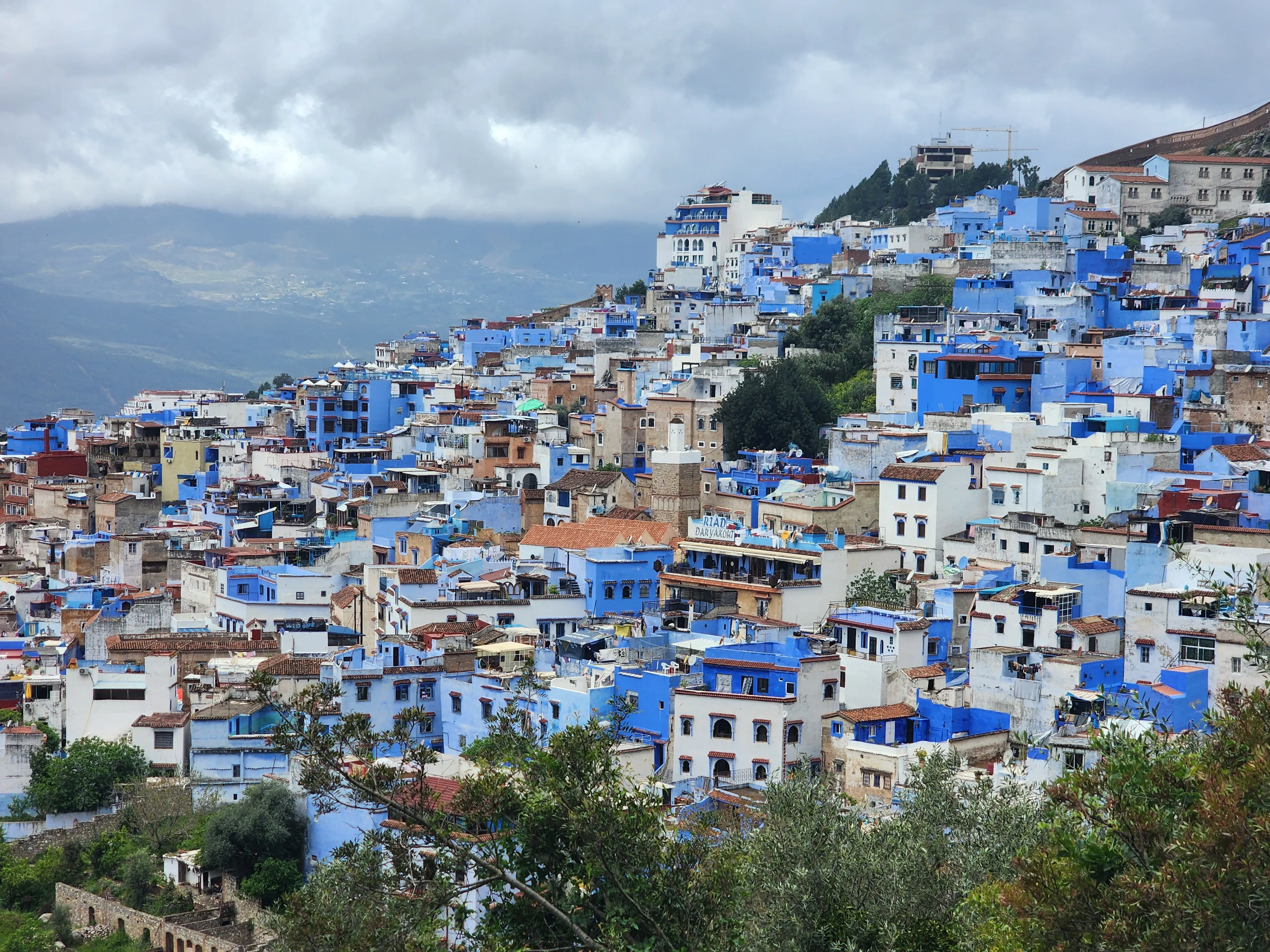
Tanger & Chefchaouen - 7 Days Northern Morocco
By UserCarte · 5 min read
Northern Morocco is the country's most layered corner — Spanish, Andalusian, Berber and Moroccan influences stacked into the same streets. A week is exactly the right amount of time to pair Tangier, the port city that has drawn writers and spies for a century, with Chefchaouen, the blue-washed town tucked into the Rif Mountains. Add a couple of easy side trips and you get coastline, medinas, mountain hikes and some of the best mint tea drinking in the country, all within a compact area you can cover without long overland days.
The rhythm most travellers find works best is three nights in Tangier, three in Chefchaouen, and one flexible night used either for a coastal stop or an extra mountain day. Distances are short — Tangier to Chefchaouen is a scenic half-day at most — so you spend your week exploring rather than in transit.
When to Go
Spring (roughly March to May) and autumn (September to early November) are the sweet spots. Temperatures are mild for walking the steep medina of Chefchaouen, the Rif is green, and the Akchour river runs strongly enough for the waterfall hikes to be worth the effort. Summer brings Moroccan and Spanish holidaymakers to the northern beaches, which is lively but means fuller riads and higher room rates, especially in August.
Winter is underrated in Tangier — the city stays reasonably temperate and the cafés are wonderfully atmospheric under grey Atlantic skies — but Chefchaouen sits at altitude and gets genuinely cold and wet, with occasional snow on the surrounding peaks. Pack layers whatever the season; the Rif and the coast can feel like different countries on the same day. Note also that during Ramadan many cafés keep reduced daytime hours, though evenings become festive.
Getting There and Getting Around
Tangier is the natural entry point. It has an international airport with European connections, a high-speed rail link south to Rabat and Casablanca, and ferry services across the Strait of Gibraltar from southern Spain — arriving by sea is the most memorable option if your route allows it.
Chefchaouen has no train station. The standard approach is a comfortable intercity bus from Tangier, which takes roughly three to four hours depending on stops, or a shared or private grand taxi if you prefer flexibility. Buses fill up in high season, so book a day or two ahead. Within Tangier, the medina and Kasbah are walkable, petits taxis (metered, and worth confirming the meter is running) handle longer hops, and the corniche is a pleasant stroll. Chefchaouen's old town is entirely pedestrian and steep — bring shoes with grip, as the painted cobbles are slick when wet.
A Day-by-Day Framework
Days one to three, Tangier. Start in the medina: the Petit Socco for coffee, the Grand Socco as your orientation point, and the Kasbah Museum for context on the region's Roman and Islamic past. The Tangier American Legation Museum is a quietly excellent stop, and Café Hafa — clifftop terraces stepping down toward the water — remains the city's best sunset ritual. Use one morning for Cap Spartel and the Caves of Hercules, a short drive west where the Atlantic and Mediterranean meet.
Day four, transfer with a stop. Two good options: Tetouan, whose UNESCO-listed medina is compact, whitewashed and far less touristed than Fez or Marrakech; or Asilah, a breezy Atlantic town of ramparts, murals and wide beaches. Either can be done as a half-day break on the way to Chefchaouen.
Days five to seven, Chefchaouen and the Rif. Give the blue medina a full unstructured day — the point is wandering, photographing doorways and lingering in Plaza Uta el-Hammam beneath the kasbah walls. Walk up to the Spanish Mosque viewpoint for sunset over the valley, and follow the stream to Ras el-Maa where locals still wash laundry. Dedicate one full day to the Akchour waterfalls or the natural rock arch known as God's Bridge, both within Talassemtane National Park and reachable by taxi from town. Guides are easy to arrange locally and worthwhile for longer routes.
Where to Stay
In Tangier, the Kasbah and upper medina put you within walking distance of the atmospheric core, with a good spread of restored guesthouses and boutique hotels in old townhouses. The seafront and Malabata areas suit travellers who want larger modern hotels, pools and easy parking, at the cost of medina immediacy.
In Chefchaouen, stay inside the medina. Riads and family-run guesthouses here are often small, characterful and built around courtyards, many with rooftop terraces facing the mountains — that terrace is where you'll eat breakfast every morning. Be prepared to carry bags up narrow lanes and stairs; if that's a concern, ask your accommodation in advance about the nearest vehicle drop-off point.
Practical Tips
Carry cash — small guesthouses, taxis, medina shops and rural trailheads frequently don't take cards, and ATMs are more plentiful in Tangier than in the mountains. Dress modestly, particularly in Chefchaouen and Tetouan, which are more conservative than the coast. Bargaining is expected in souks but should stay good-humoured.
In Tangier, unofficial guides can be persistent around the port and Grand Socco; a polite, firm refusal is normal and sufficient. Tap water is generally treated in cities, but many travellers stick to bottled or filtered water. Finally, always confirm current opening hours and bus departure times locally on the day — schedules shift with season and holidays, and a quick check at your riad's front desk saves a wasted morning.